
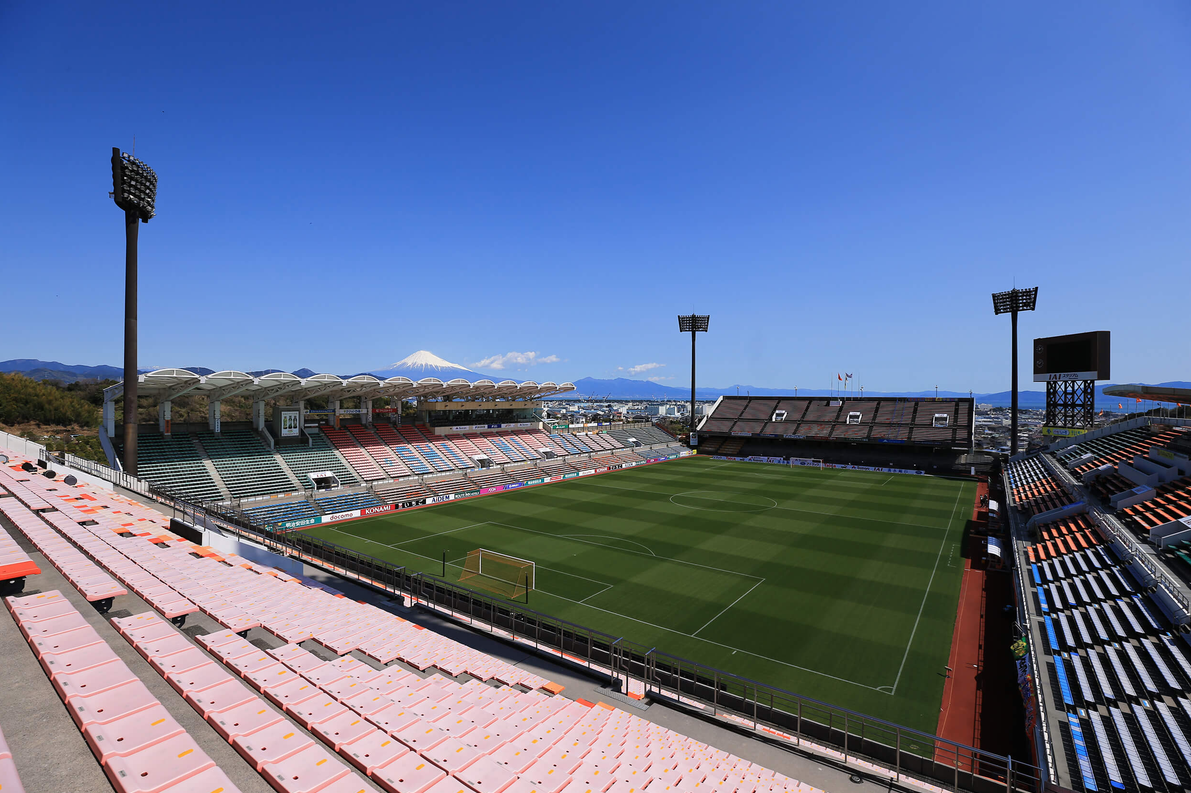
My 4222 Brazilian tactic with Shimizu S-Pulse (Season 2)


I imagine that any view you have on ‘Seleção’ (the Brazilian National Team) would depend on how old you were when you first saw them play.  ‘Boomers’ like my dad’s generation would rave about the teams of 1958 and 1962, led by the all-scoring Pelé.  My brothers’ would have seen the 1980s teams with mavericks like Sócrates fail against more streetwise European sides.  Whereas me, being notably younger than my siblings, would have first enjoyed watching the successes of the 1990s and early 2000s sides.  A more recent generation of football fans would have seen Brazil for the first time as a team lacking experience, cunning and capitulations on the most epic of scales.  However, despite the contrasting fortunes of the Brazilian national team three common themes are usually present:

  1. Improvisation and creativity - Brazil has always valued individual flair over rigid systems.  Whilst recent Brazil teams have been more pragmatic and defensively organised, the classic traits of improvisation are never far to be found.

  2. Attacking Full Backs/Wing Backs - Brazil like their Wing Backs to advance high up the pitch, overlap, and often act like extra wingers in attack.  Nílton Santos in the 1950s revolutionised the full-back position and since then there have been too many to name in this blog.  But three of my favourites are well known: Cafu, Roberto Carlos and Dani Alves.

  3. Technical mastery - the street and futsal influences within Brazil’s youth pathway mean that players are comfortable when receiving, turning, and passing under pressure.

A common formation, allowing Brazilian players to do all of that, has been the 4222.  It is often dubbed the ‘Brazilian Box’ or ‘Magic Box’ and has been used extensively throughout football over the years.  This post is not a direct translation of a particular 4222 system in time, or a replication of a particular manager's philosophy…rather it is me taking the bits I think make Brazil football what it is and adding it to my Shimizu S-Pulse side for the second season in FM26.

Firstly, here’s a quick three-part Q&A with myself that is a quick way to get up to speed as to why I am changing tactics this early into a save…

Question 1: Why change a title winning tactic for something untried and untested?

It’s true, Shimizu were the No.1 team in the J1 league last season…topping a lot of metrics and playing some great football.  However, we cannot stand still.  The 4231 was built around two MVPs (Takashi Inui - a playmaker and Capixaba - a winger) who have decided to leave on Free Transfers.  Whilst I could find similar players, would those players signed live up to what the previous two did for S-Pulse last time out?

Question 2: Shimizu will play in the 2026 Asian Champions League, is changing now a risky move?

Yes.  It will be interesting to see how I fare in this competition…however the Asian Champions League is not until the end of the calendar year.  Due to a league restructure (with the J1 now delayed to start until August 2026), a special J1 tournament fills the formative months of the year.  It is the perfect time to try out a new system, without any domestic cup or J1 games intertwined, and get everybody familiar with this before the Asian Champions League.

Question3: Were you always going to change to a 4222 tactic?

Yep.  Even if Takashi Inu and Capixaba signed deals to stay this season…eventually I would have phased out wider players and recruited players to suit a more narrow 4222.  Afterall, I am focusing on signing Brazilians in this save.  It would be rude not to try a form of 4222 on the new FM26 engine. 


The 4222 tactic

Key differences with my 4231: Firstly, let’s look at a high level of what the previous 4231 was all about:  Direct long-ball counter attacks with lots of dribbles (you can read about that here).  You may have differing views when reading this (again with whichever lens your first experience of watching Seleção was), but those traits I just mentioned are not Brazilian.  Whilst Brazilians can clearly dribble…they have often been a ‘pass first’ team.  So, the only frequent dribblers in the 4222 will be my Wing Backs.  I would even say that the Direct Counter Attack needs to change too, I would like my Brazilian side to progress with more calmness and exert more control on the game.

Team Instructions: Usually I introduce the Player Roles first, but I thought I would treat this post differently and summarise the style of football first.  I have already given detail above of some of the key flavours of football, but here are the instructions in their entirety. Note - my starting Mentality is Balanced (and I rarely change it).

Now the purists would come and tell me that Creative Freedom ought to be maxed out, a reminder that this is not a total replication.  But the samba in this tactic is best shown in the Progression.  I want to move my team forward, and to do that I have instructed the team to progress through the middle, play into feet and encourage underlapping runs on each side of the pitch. Out of possession we are very aggressive.  We will regroup and get back into a disciplined 442/451 shape as soon as reasonably possible, but we will press like rabid animals and get stuck in with tackles when the opportunity arises.

Player Roles: Now to the fun part: the roles! The 4222 can be grouped into four outfield sections…Defenders, Wing Backs, Playmakers and Strikers:

Note - When out of possession the AP and the SS become left/right sided midfielders respectively to form 442.

Three Defenders - in real-life I am currently infatuated with Martín Zubimendi and the way he slots into the Arsenal backline when in possession and the knock-on benefits that has brought to the team.  Those benefits are that it allows the centre-backs to position themselves wider and also pushes the full backs forward.  In my 4222 this is crucial too…with the Half Back slotting into the back three (as a left sided CB), the Wing Backs then have licence to move forward and offer the width needed further upfield.  If we go back to the Brazil team I used to watch as a teenager…I remember Centre Back/Defensive Midfielder hybrid Edmilson in World Cup 2002 doing something similar, which allowed Roberto Carlos and Cafu to effectively play as wingers for Brazil.

Two Wing Backs - There is no need for ‘Advanced Wing Backs’...standard ones will suffice.  The ‘three at the back’ security is there and the higher lines of engagement out of possession will move them up to play predominantly in the opponent’s half.  I need guys who are good in the 1v1 (Dribbling) and have an end product to their game (Crossing).  I have Player Instructions added to increase the frequency of their dribbling, apart from that it is very simple.

Two Playmakers - Usually I only have one playmaker in my side, but to enhance the central play I have a Deep Lying Playmaker at DM and an Advance Playmaker between the lines at AM.  These are two ball magnets, one for the build up + progression and one for the final third.  I have positioned them diagonally from one another (one left side and one right) in order to provide distance for both to flourish.

Three Strikers - I am ultra-attacking here with three goal-threat strikers. But my reasoning is that one of those strikers (Shadow Striker) resets into a wide position when out of possession.  This means he will be somewhere between the two areas during a transition.  When our build up is paced right, he will move into the striker position with the Channel Forward often making wider runs out wide (see example goal further on in this post).  I see great interchanges between the two roles here, whilst the Centre Forward remains a constant goal threat and a focal point of the attack.


2026 Shimizu S-Pulse New Signings

I have outlined my approach to recruitment in a previous post (read here), and the good news is that it is going well. There have been plenty of Brazilians signed and the relaxed restrictions from 2026 mean I have near limitless opportunities to sign and field foreign players (maximum squad size of 99 + no restrictions on how many are fielded in a match day squad). In total 16 players were signed and 11 of them are Brazilians (that’s 69% lads). All signings have been recruited with the 4222 in mind, so there has been a focus on Wing Backs and also players capable of playing DM and AM. I will not go through every player signed, but I will take a selection of seven recruited players from the above split of (Defenders, Half Backs, Wing Backs, Playmakers and Strikers).

Defenders - Roger Ibañez (Free) + Erick Noriega (Loan to buy)

The Marquee signing of 2026 is undoubtedly Roger Ibañez, who joins on a Free Transfer after a two-year stay in Saudi Arabia with Al-Ahli. ‘Mad Dog Rog’ becomes our highest earner and is the only one special enough for ‘Star Player’ squad status. I remember this guy kicking people in Serie A and I look forward to him adding a bit of steel to our defence. Alongside him is Erick Noriega who will be the No.1 Half-Back in our new-look 4222. He appeared in a Brazilian Serie B Recruitment Focus, and agreed to re-join Shimizu for €3.3m after an 18-month loan. The eagled eyed reader(s) will notice I wrote re-join there…because incredibly Erick is a Shimizu S-Pulse homegrown player (being born in Japan and playing in various Shimizu youth squads between 2017-2022)…something I did not know until he appeared in my recruitment focus. A wonderful, and surprising, homecoming.

Wing Backs - Saidazamat Mirsaidov (€550k) + Wesley Gasolina (Free Transfer)

€550k was spent bringing Uzbek Saidazamat Mirsaidov to Japan. He hugs the line and likes it played into his feet, more than enough justification for making him my first choice right sided Wing Back. His deputy is Wesley Gasolina, who was discarded from the Brazilian Second Division having been released by Athletic Club (Minas Gerais). A huge part of my recruitment at Shimizu S-Pulse is to give emerging talents overlooked by Europe, and within Brazil itself, another chance. Gasolina is a good example of this, he is relatively average in places but he is good off the ball, can dribble and cross.

Playmaker - Yuri Leles (Loan)

Yuri Leles appeared in a Recruitment Focus with a strong scout report. Red Bull Bragantino were agreeable to a loan that means he returns to them as a 20-year-old in June 2027. Their only insistence was that Yuri plays AMC, so that’s where he will play most of the time: as our new Advanced Playmaker. I quickly saw on his debut (where he made two great assists) Vs Kobe that he will be a special player for Shimizu S-Pulse over the next year.

Strikers - Damián Bobadilla (Free) + Ado Onaiwu (Loan with option to buy)

Damián Bobadilla is another marquee signing, a full International already with Paraguay…he leaves Brazil Serie A for Shimizu S-Pulse and has a big wage. His versatility is his biggest strength, he can play as the Deep Lying Playmaker or the Advanced Playmaker…but most of the time he has been our Shadow Striker. His traits of ‘getting into the opposition area’ and ‘gets forward whenever possible’ complement the role well. It is therefore no surprise that he finished as our 2nd highest top scorer within the J1 Special Tournament with 8 goals.

The side’s top scorer however was Japanese international Ado Onaiwu, who joined on loan from FC Magdeburg in Germany thanks to an Agent Offer in the Recruitment area of FM26. Ado Onaiwu has been a lethal Channel Forward for us, contributing to ten goals in 18 games. There is a €1m optional deal agreed as part of the loan and I think I would be a fool not to sign Ado permanently.


2026 ‘J1 Special Tournament’

The season started brightly with a 6-2 Super Cup trophy win Vs last season’s Emperor's Cup winners Yokohama FC 🏆 The 4222 then continued strongly with 11 wins in the J1 Special Tournament, where the top league has split into two groups of ten clubs. I was not sure what would happen after winning the group, but it turns out that each team plays their opposite ranked team in the other group (1st Vs 1st, 2nd Vs 2nd etc). It hardly seemed a good reward for topping the group…however the resulting 6-5 two-legged victory Vs Group B Winners Kashiwa meant we had won another trophy (and the third of the save)! The special tournament ended with the 19th and 20th game 🏆

How did the tactic perform?

We did not top as many of the attacking metrics compared to last season’s 4231. However we can take a lot of comfort seeing us top the ‘Chances Created’ metric with 88 over the twenty games (4.4 per 90). The 4222 is highly successful from a defensive viewpoint though. Shimizu S-Pulse were undoubtedly the best defence in those twenty games with 21 goals conceded in 20 games (1.05 per 90), and the side had the ‘Fewest Final Third Passes' against with 77 in 20 games (3.85 per 90). The aggressive press and telling the players to ‘get stuck in’ meant we also topped the ‘Fouls’ table with 231 over the twenty games (11.55 per 90) 🔥

The J1 League Special Tournament is the third trophy of the save so far.

My favourite goals from the 4222 came in the same game, Vs Yokohama FC in the J1 Special Tournament league stage. Succulent interplay…

A lovely team move with Onaiwu finishing to make it 1-0.

2-0. Lovely central play between Half Back-Channel Forward-Shadow Striker


Season’s Greetings

This is most likely my 5th and final blog post of 2025, so it’s time for me to wish you a Happy Christmas and great New Year! Reminder to readers that a new FM26 patch arrives sometime within the first two weeks of December, so get that in your festive download queue via Steam Public Beta Track! 🎁

Thank you for reading/sharing and caring. See you next year.

Tony / FM Grasshopper

Recruitment at Shimizu S-Pulse in Football Manager 26


This is an update from my Shimizu S-Pulse save in the J1 league, Japan. The in-game date is May 2025, and I have set up my recruitment team and have begun to scout players.  I thought I would show how I intend to find and sign players in FM26, as it is a bit different to what I have done in previous years.  You can read my save introduction here.

This post will be broken down into the following sections:

  1. Orange Samba

  2. Backroom Staff

  3. Recruitment Focuses

  4. TransferRoom

  5. Shortlists

  6. Results


1. Orange Samba

Shimizu wears orange, and we’re focussing on signing Brazilians in this save.  Put these two things together and we have Orange Samba.  This will be the name of the club culture I will reference throughout the blog series. In Season 1 we already have five foreign players and the J1 league restrictions prohibit more than this in a matchday line up. However, there are upcoming changes to the Japanese leagues from August 2026 which I am very excited about:

  • The league will move to a ‘European’ format, beginning in August and ending in May. It is intended that this will make it easier for Japanese clubs to do business.

  • Squad size will change from 25 maximum players to a whopping 99.

  • No restrictions on foreign players.

With all the above in mind, it is important I lay down the ground work now in order to have a long list of scouted players for Shimizu S-Pulse in time for Summer 2026.


2. Backroom Staff

Navigate: Club/Staff

Setting up a good recruitment team and organising my scouting is key to this save as I have decided not to use the ‘Player Database’ (formerly known as ‘Player Search’).  This means I solely rely on staff recommendations and agent offers to add an extra challenge to my save.  

On Day 1 of the save, Shimizu had no recruitment staff whatsoever.  So, Orange Samba starts with me building a predominantly Brazilian recruitment team.  Now, with FM26, I am unsure how much of this makes a difference in the new era of FM…but my reasoning for recruiting Brazilian staff is pretty logical.  (1) they already have a comprehensive knowledge of their home country + domestic leagues and (2) they help increase the likelihood of Brazilian newgens coming through into the club youth teams.  This was also the case in previous FMs, so I hope it helps this time round in FM26.  To find staff I head to Recruitment/Staff Database and use search filters.

I have maxed out on the number of Scouts allowed by the Board, I also recruited a Chief Scout and Director of Football to handle transfer negotiations.  This takes our recruitment team to a total of six, five Brazilians and a solitary Japanese guy who will be stationed at home so he can scout our own domestic J leagues.


3. Recruitment Focuses

Navigate: Recruitment/Recruitment Focuses

Once I have a team in place, I will use Recruitment Focuses for ongoing Orange Samba scouting in Brazil.  Here are the two recruitment focuses I set up for Brazil:

Brazil Youth (15-23)

Number of scouts: 2

Probably the most important Recruitment Focus for Orange Samba is the Brazilian Youth focus.  I’ve chosen 15-23 year olds who have a minimum 3 star Potential Ability, for Current Ability I have set zero stars.  Remember: the idea of this save is not to chase stars, but to find hidden gems instead who can improve.

Brazil Série B

Number of scouts: 2

Campeonato Brasileiro Série A players are likely to be out of our range in terms of transfer fee and likely wage.  Instead I have targeted Campeonato Brasileiro Série B sides, in order to see if any players meet my recruitments.  I have gone with a minimum ability of 2 stars for Current Ability and 2.5 starts for Potential Ability.  No restrictions of age, or anything else really.  Just show me who is decent in Série B and who could hold their own in the J1 league.

I also have a couple of domestic Recruitment Focuses too.  This is because the majority of my squad still needs to be domestic players in order to comply with 2025 J1 league rules.  Here is what I have set up:

Japan J1

Number of scouts: 1

I have set a current ability of 2.5 stars and potential ability of 3 stars.  This is reflective of the J1 league status.

Japan J2

Number of scouts: 1

I have set 2.5 stars for both current and potential ability.  Despite being from a league below, I want the J2 players to be competitive with the current make-up of our squad.


4. TransferRoom

Navigate: Recruitment/Transfer Room In (or Out)

I will be using TransferRoom Out for outgoing players, I have often struggled with selling players in previous FMs.  I loaned out a couple of players this season using the approach, and I think it will also be useful for permanent outgoings too.

It is perhaps TransferRoom In that I have enjoyed more, despite not yet using to sign a player.  It has opened my eyes up to a few targets I would not have seen from my Recruitment Focuses.  I see TransferRoom In as a way to fill a gap in the squad in a relatively short period of time.  Have you had a long term injury rock you with a couple of weeks to go before the transfer deadline approaches?  Use Transfer Room In, you will be offered players who are willing to come (for the right price and wage of course).

Note - unfortunately, at the time of writing, the TransferRoom In requests are pertinent to the time of your enquiry and do not seem to update (i.e the suggested sum of players do not change). So, you may want to strategically time your adverts within Transfer Windows and perhaps publish several. It is unclear if this is a bug, by design or just some quirk with my saves so far. The official feature blog stated: “Your ad will be circulated to every club in the game, and they’ll have the ability to come back to you with players they have that might fit your needs. Your Director of Football will make recommendations to you based on what the clubs come back to you with, with you then able to approach their agent, scout the player for yourself, make an offer or wait for more options to arise”.


5. Shortlists

Navigate: Recruitment/Shortlists

Once targets are identified, I will move the players into Shortlists (Right Click/Add To Shortlist). These will usually be A-B recommendations. From here I will review the scout reports and then initiate my Director of Football to start making bids.  I do this by right clicking on the player and selecting ‘Transfer/Add As Transfer Target’.

If you want to see how it’s going, I go to the Director of Football workflow in Transfer/Recruitment Activity.  The Negotiating attribute is the key Director of Football attribute here. Mazinho Patrão is ‘Good’, and I have captured what FMPedia says about Negotiating too:

When asking the Director of Football to make the deal I will set the agreed playing time, right now FM26 is defaulting to ‘Surplus to Requirements’ for me…I would advise giving an agreed playing time that is reflective in how you intend to use this player when they arrive.  Overpromise and you may get an unhappy player soon into their contract.  Another thing I set is the wage amount.  I usually match their current wage and increase it slightly. Most people in life want a bit more money when they change jobs.  The below is how it currently looks like in my save, as I chase a few domestic end of contract signings when we are legally allowed to do so in about 6 weeks time…


6. Results

I have been successful with two signings so far from two Recruitment Focuses (Brazil Série B and Japan J1).

Daniel Cruz - Shimizu’s Number 9

Daniel Cruz is a good example of the kind of signing I want to make on this save, not a household name and unlikely to get any opportunity at Club Athletico Paranaense; even with them being in Série B.  The signing made sense because he can play in three forward roles in my 4231 (something i will write about in a future blog).  He can play the right sided winger well (Acceleration, Dribbling, First Touch and Off The Ball all being 14s) and he also has the attribute spread to play Wide Forward and Centre Forward with relative ease (Finishing, Flair, Pace and Strength all 13s).  The scout report says he is unlikely to improve considerably, but I think can do well in Japan.  He joins on loan with an option to buy for €350k, should he settle in well.  Orange Samba is up and running!

Kei Chinen - Deadline Day Signing

Whilst the Transfer Deadline Day interface was not added back into Unity FM26, I did experience the drama of a deal running down to the last hours of a Transfer Window.  It is unclear if this is ‘by design’, but I had agreed both the €1.4m transfer with Kashima Antlers and contract with Box to Box Midfielder Kei Chinen 20-or-so days before the deadline was due.  However, Gamaba Osaka were also trying to sign Chinen and were having their loan bids rejected by Kashima. It looked like the player held out until the final moments before joining us at Shimizu.  I really liked this, as it felt realistic to how a lot of deals go in real life.

Kei Chinen is a brilliant Box To Box Midfielder, high attribute scores in Determination, Off The Ball, Stamina, Teamwork and Work Rate.  Like Daniel Cruz, he also has the versatility to play in a couple of other roles in the 4231: Defensive Midfielder and Advanced Playmaker.  I have made him one of my higher earners on €400k annual salary.


Next Up

My next post on the blog will most likely be a summary from Season 1, where I still have 6 months of J League football left to play.  Let’s see how Daniel Cruz and Kei Chinen settle into life at Shimizu S-Pulse.

Thanks for reading/sharing and caring.

Tony / FM Grasshopper

Why Shimizu S-Pulse in FM26?

Welcome back to CoffeehouseFM.

Post-imperial Japan is fascinating. The country’s culture had previously been one of the most secluded and preserved, until Allied forces occupied it for 6 years after World War II. Under US General Douglas MacArthur there were sweeping reforms in order to change Japan’s political systems, the ultimate power was put in the hands of the people and not the emperor.

While the ink was still drying on the 1951 Treaty of San Francisco paperwork, which saw the Allied occupation end, the cultural change in those few years was irreversible too. Food, entertainment, fashion would all change; and so would sport. Perhaps ‘soccer’ was one of the last to catch on. The 1960s saw Japanese soccer mirror baseball, where large co-operations would own a team of amateur players. But the big change came in 1992, when most of those co-operations were brought into the new professional-era called the ‘J-League’.

Ten clubs kicked off that inaugural campaign, nine of them big corporation owned…but there was one outlier. A newly formed non-company club was formed in Shimizu-ku, Shizuoka: it was initially called Shimizu FC, but after a few months it would be renamed to Shimizu S-Pulse (in keeping with Japanese tradition of using English, French, Portuguese or Spanish in many club names). The pulse is a literal embodiment of its fans' enthusiasm for soccer and, with my pulse now raised, it is where I want to manage on the full release of Football Manager 2026.


Really, why Japan?

Fully licensed league

I think it is fair to say there were a few hiccups with the launch of the J-League into FM24.  Certain players were not in the game right away and the database perhaps needed more eyes on it to increase the accuracy.  But an excruciating time has passed, and I’m more confident about dipping my toes into the league for a J League save.  That confidence was also demonstrated at the inaugural FIFAe tournament, where Yokohoma F. Marinos was one of the Group Stage clubs (something which I also played along with at the end of the FM24 cycle).  It is a really enjoyable league, and it will have all the fancy player/club pictures.

Finding the next Hulk


The J League has a love affair with Brazil (around 50% of all foreigners in the J League are from the country).  Although S-Pulse started its history with a cantera type policy of fielding players only from the Shizuoka Prefecture, I intend to keep with the current fashion of signing Brazillians.  However do not expect them to be big names though, instead I plan to unearth some Brazilian talent that is perhaps beneath the classification of ‘Wonderkid’.  Players who are talented enough to have a decent career as long as they have gametime.  The best example I can give is that of Givanildo Vieira de Sousa, but you would know him as ‘Hulk’.  As a teenager he made the move from Serie A fringe player to Japan and excelled at the chance to play competitive football.  After 74 goals in Japanese football over three years Hulk earned the big move to Europe, ending up at FC Porto for the 2008/09 season.  Can I find the next Hulk in FM26 and move them on to Europe?

Another example is my chosen Manager Man: Bismarck Barreto Faria, better known as just ‘Bismarck’, who at 24-years-old moved to Japan. In real-life the attacking midfielder went on to play for Verdy Kawasaki, Kashima Antlers and Vissel Kobe over a 9 year spell in Japan in the 90s. I will be stealing his identity for my save, which fits narratively with the save’s ethos as I focus on Brazil’s Série A, B and C for emerging talents overlooked by Europe: technical midfielders, explosive wingers, and clever forwards. The idea is not to chase stars, but to find hidden gems instead.

Adopt a salary cap

Out of necessity, every club operates within its own salary cap. Players are usually organised in salary bands, and that usually is a private matter between player and club. Some leagues (e.g. Major League Soccer in North America) and confederations go a bit further and set caps on spending, in order to ensure parity between league members…or to at least look like parity is an aspiration in the case of UEFA’s Financial Fair Play.

In my opinion, Major League Soccer’s approach is great and they do that via their franchise structure.  FM22 has been one of my favourite saves since blogging so far.  I loved working and operating within a strict budget + salary cap with Inter Miami.  There’s something very ‘socialist’ about it all: players getting comparable pay in a team sport.  Furthermore, it was great to get the spreadsheet out and organise my squad to the minute detail, ensuring I got the most ‘bang for my buck’.  Just like Japan adopted some American traits in its post-war history, I want to adopt the MLS salary cap system. 

In order to get to the number that I feel offers the balance between FM challenge Vs realism, I would look to get my salary cap number based on a % of my club turnover.  This is similar to how UEFA’s FFP operates.  As a reminder, from 2025/26, UEFA’s new Financial Fair Play rule limits spending on player and coach wages, transfers and agent fees to 70% of club revenue.  I am not quite sure what my salary cap needs to be just yet, Season 1 will probably be the cap that the Board has set in-game. However for subsequent years I will likely take the % of turnover model.

Other miscellaneous reasons

Cherry blossom/sakura trees in bloom are great.  I also like vegetable sushi, mochi, karate, the colour orange and Japanese lo-fi.  Put them all in the Grasshopper blender, season it with an S-Pulse FM save and I am good to go for FM26. See you there?


My FM26 aims ✅

  1. Sign young Brazilians, and let them use Shimizu as a stepping stone.

  2. Adopt a salary cap.

  3. Maintain J League status, and work to challenge for the title within 3-5 years.

  4. Ultimately: win things, lots of things. FIFAe style.


Changing how I play…

I have deliberately put this section towards the end of this post, because I do not wish to kill peoples’ enthusiasm towards FM26.  But it has got to be noted: Football Manager 26 will change the way I play the game.  To be fair, this is probably in keeping with Miles Jacobson’s remarks who said in several pre-release interviews that FM26 is a totally different game to the previous titles before it.

There are a number of UI pain points, and whilst you can play FM26 and progress through seasons…in order to have a long(ish) term save I feel like I need to delegate a lot of tasks in the game to my backroom staff in order to keep sane.  I will not be conducting media duties, take the training or handle [most of] the scouting functions.  It means I will be processing the game much quicker than usual, but I am unsure if this means I will have longer saves.  I do plan to write a bit more about how I delegate certain functions, including transfers, scouting and utilising the (new and great btw) Transfer Room system.

Another blow for me personally is that you cannot currently export data out from the game, and the data that is there in-game is also sketchy.  Deep dive Football Manager saves, adopting data driven recruitment practices for example are perhaps too complicated to do this time around. Football Manager 26 has stripped out some of the immersiveness that made the previous 20 years so good for us Bloggers.

Despite all this, I remain eager to get going with FM26 🙂

Thank you for reading/sharing and caring.

Tony / FM Grasshopper